Product Categories
Contact Us

High Temperature Alloys for Gas Turbines

  • High Heat Resistance: Withstands temperatures over 500°C.

  • Durable: Resists oxidation and corrosion.

  • Applications: Used in turbines, aerospace, and industrial machinery.

  • Types: Includes nickel, cobalt, and titanium alloys.


Product Description

High-temperature alloys are designed to keep their structure and function in conditions where standard metals would quickly break down.

In the demanding realms of aerospace, power generation, and industrial processing, materials are pushed to their physical limits. High-temperature alloys, also known as superalloys, are a class of materials specifically engineered to deliver exceptional mechanical strength, surface stability, and corrosion resistance under extreme thermal and mechanical stress. These advanced materials are the foundation upon which modern high-efficiency technologies are built.

Defining Characteristics and Core Properties

High-temperature alloys are formulated to maintain their structural integrity and performance in environments where conventional metals would rapidly fail. Their superior capabilities are derived from a complex composition of elements and advanced metallurgical processing.

a pencil on a table

Exceptional High-Temperature Strength

These alloys retain a significant portion of their tensile and creep-rupture strength at temperatures often exceeding 80% of their melting point. This resistance to deformation under sustained mechanical load at high temperatures is their most critical property.

Outstanding Oxidation and Corrosion Resistance

When exposed to hot gases and corrosive atmospheres, they form a dense, stable, and adherent oxide layer (typically chromium alumina, or silica scale) that acts as a protective barrier, preventing further degradation of the underlying material.

Microstructural Stability

Their strength is imparted by mechanisms such as solid solution strengthening and precipitation hardening (using phases like gamma prime, γ’), which remain stable and resist coarsening over long periods at operational temperatures.

Primary Alloy Families

gray and black welding machine

The portfolio of high-temperature alloys is broadly categorized into three main groups, each with distinct advantages:

Iron-Nickel-Based Alloys

  • Characteristics: An economical workhorse group, often strengthened by precipitation hardening. They offer a good balance of performance, fabricability, and cost.
  • Common Examples: Alloy 800H/HT, Alloy 625, Alloy 718.
  • Typical Applications: Turbine disks, casings, boiler components, and heat treatment equipment.

Nickel-Based Alloys

  • Characteristics: The most widely used class for the most severe conditions. They offer the best combination of high-temperature strength, creep resistance, and corrosion resistance.
  • Common Examples: Inconel 738, Hastelloy X, René alloys, Mar-M247.
  • Typical Applications: Rotor blades and vanes in the hottest sections of gas turbines, rocket engine components, and nuclear reactors.

Cobalt-Based Alloys

  • Characteristics: Excel in environments involving thermal fatigue, wear, and hot corrosion (sulfidation). They possess superior melting points and are often used in static components.
  • Common Examples: Haynes 188, Stellite alloys, X-40.
  • Typical Applications: Nozzle guide vanes, combustor liners, and hot-gas path components.

Dominant Applications

The performance of these alloys enables technological progress across several critical industries:

Aerospace & Gas Turbines

  • Jet Engines & Power Turbines: Rotor blades, stator vanes, combustor cans, and afterburner components. They are the key enabler of higher turbine inlet temperatures, which directly correlate to improved efficiency and power output.

Power Generation

  • Industrial Gas Turbines (IGTs): Similar hot-section components as in aerospace.
  • Nuclear Reactors: Core components, heat exchangers, and piping systems.
  • Coal & Waste-to-Energy Plants: Boiler tubes, superheater pendants, and components exposed to aggressive ash and flue gas environments.

Industrial Processing

  • Chemical & Petrochemical: Reactors, piping, and fittings in catalytic reformers and cracker units.
  • Heat Treating: Furnace fixtures, radiant tubes, and trays.
  • Automotive: Turbocharger wheels and exhaust valves.

Our Product Capabilities

We supply a comprehensive range of high-temperature alloys in various forms to meet stringent application requirements:

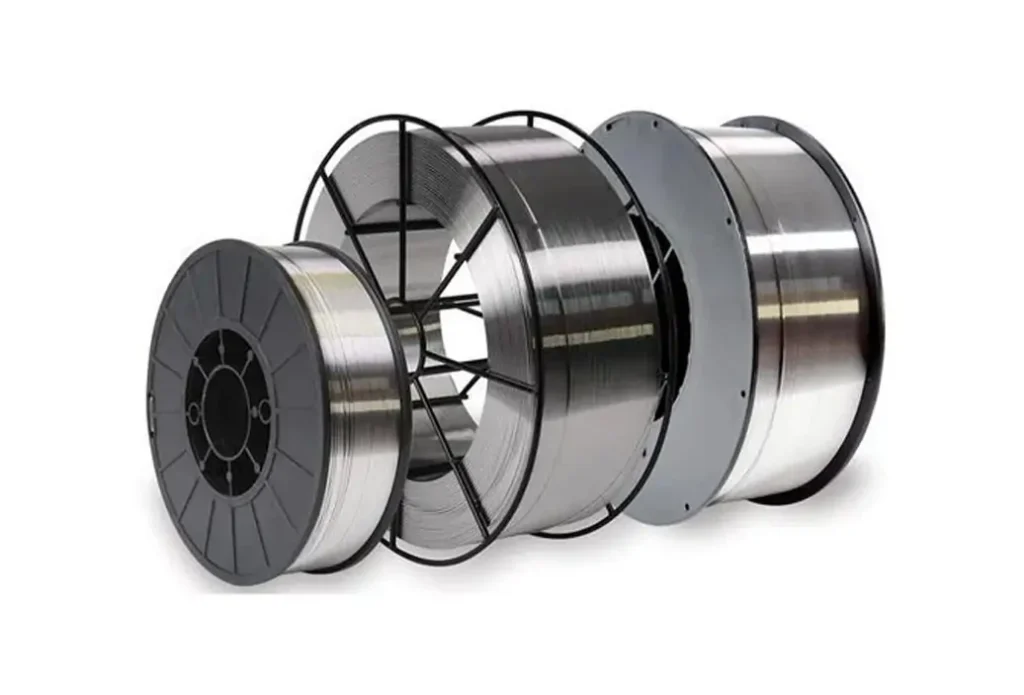
  • Product Forms: Bare and coated sheet, plate, bar, billet, pipe, tubing, and wire.
  • Specialist Services: We provide expert material selection guidance and supply alloys for both conventional machining and advanced manufacturing processes like investment casting and powder metallurgy.
  • Quality Assurance: All materials are sourced from certified mills and supplied with full traceability and compliance to international standards such as ASTM, ASME, AMS, and ISO.

Related Products

Send Your Inquiry Today