- Danyang Yisheng, Your Trusted Partner for High-Quality Alloy Solutions!



In the world of high-performance metals, few names command as much respect as Hastelloy. Renowned for its exceptional resistance to corrosion, oxidation, and high temperatures, this family of nickel-based superalloys is a cornerstone of modern industry. Among its most versatile and widely used forms is the Hastelloy alloy rod . This product serves as the critical raw material for manufacturing components that must survive in the most aggressive environments on earth, and beyond.
This article delves into the properties, common grades, and applications of Hastelloy alloy rod, explaining why it is the material of choice for engineers facing extreme chemical and thermal challenges.

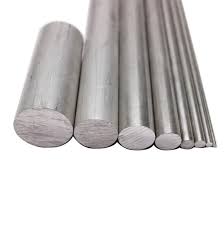
A Hastelloy alloy rod is a cylindrical bar stock made from a series of advanced nickel-based alloys, primarily composed of nickel, molybdenum, and chromium. The “Hastelloy” name is a trademark of Haynes International Inc., and it encompasses a range of specific alloys, each tailored for different corrosive conditions.
These rods are produced through various processes, including vacuum induction melting (VIM) and electro-slag re-melting (ESR), to ensure extreme chemical and microstructural homogeneity. They are available in different diameters, lengths, and tempers (e.g., hot-rolled, cold-drawn, annealed, and pickled) to suit subsequent machining, forging, or fabrication processes.
The superiority of Hastelloy rod stems from the unique combination of elements in its composition. The key advantages include:
The unique properties of Hastelloy rod make it indispensable in industries where failure is not an option.
Selecting the right grade is paramount and depends entirely on the specific temperature, pressure, and chemical environment it will face. Consultation with a materials engineer or alloy specialist is highly recommended.
Machining Hastelloy requires expertise. These are tough, work-hardening alloys. Successful machining requires:
The Hastelloy alloy rod is more than just a piece of metal; it is a high-performance engineering solution. Its legendary resistance to corrosion and heat ensures the integrity, safety, and longevity of critical equipment across some of the world’s most challenging industries. By understanding its properties, grades, and applications, engineers and designers can specify this superior material to solve complex problems and push the boundaries of technological innovation.